
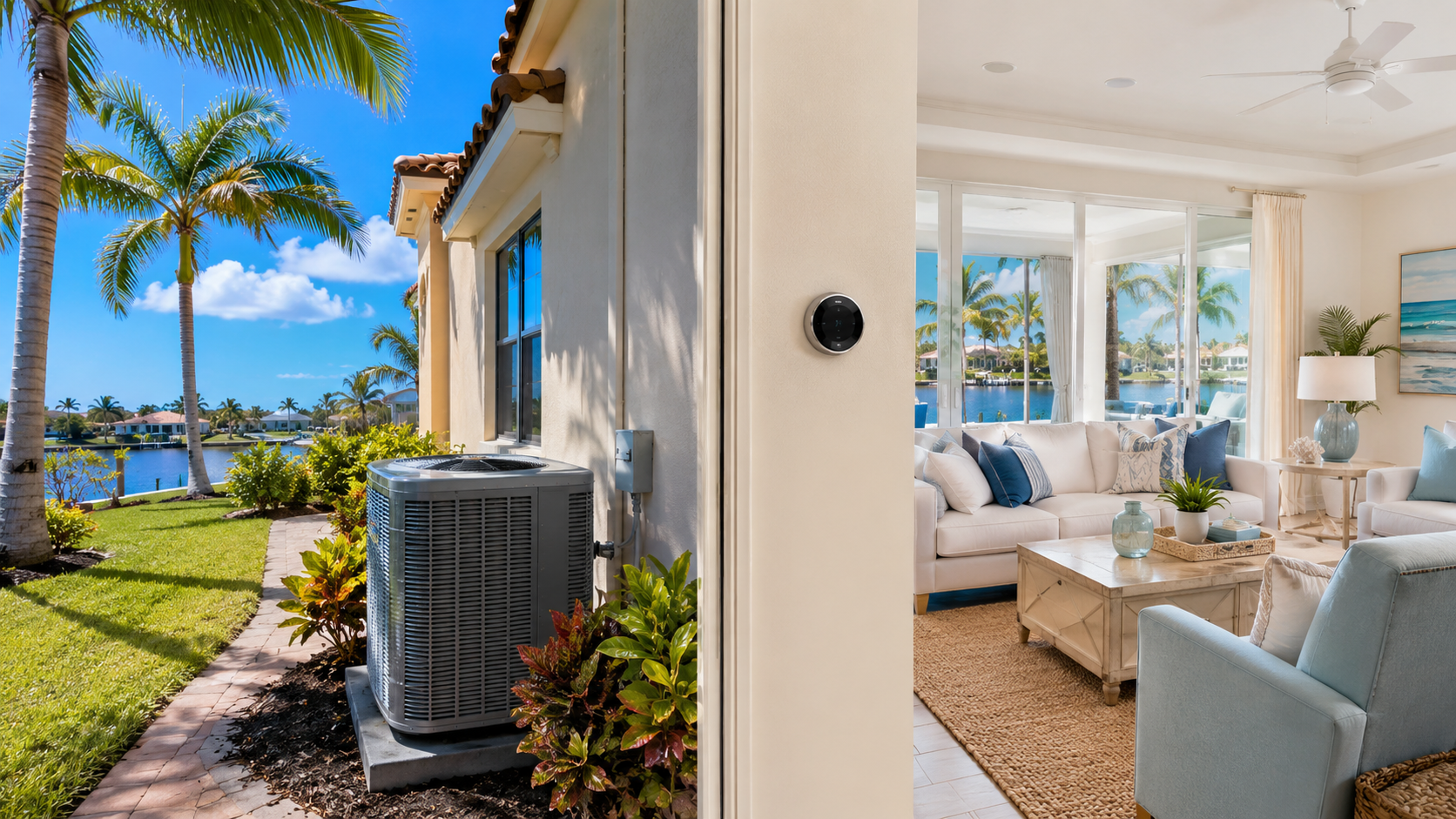
Air conditioning is not a luxury in Cape Coral.
It is one of the most important systems in the house.
Between Florida heat, humidity, long cooling seasons, afternoon storms, and year-round use, your AC works hard almost every day. When it is running properly, you barely think about it. When it stops working, the house can get uncomfortable fast.
The good news is that basic AC maintenance can help prevent many common problems. You do not need to be an HVAC technician to change filters, keep the outdoor unit clear, check vents, watch for warning signs, and know when something is off.
This guide covers simple AC maintenance tips for Cape Coral homeowners, what you can usually handle yourself, and when it is time to call a professional HVAC company.
CapeCoralNow is not currently recommending a specific HVAC company. As we continue building local home services resources, we may feature trusted Cape Coral providers in the future. For now, use this guide to better understand how to care for your AC system and when professional service may make sense.
Table of Contents
Why AC Maintenance Matters in Cape Coral
Cape Coral homes depend heavily on air conditioning.
Your AC does more than cool the air. It also helps remove moisture, improve comfort, support indoor air quality, and keep the home livable during hot and humid weather.
When maintenance gets ignored, small issues can turn into bigger problems, including:
- Higher electric bills
- Weak airflow
- Uneven cooling
- Musty smells
- Clogged drain lines
- Water leaks
- Frozen coils
- Poor humidity control
- Extra strain on the system
- Shorter equipment life
- Emergency repair calls
A little routine maintenance can help your system run more efficiently and reduce the chances of a surprise breakdown during the hottest part of the year.
1. Change Your AC Filter Regularly
Changing the air filter is one of the easiest and most important AC maintenance tasks.
A dirty filter restricts airflow. When airflow is blocked, the system has to work harder to cool the home. That can reduce comfort, increase energy use, and put extra strain on the equipment.
In Cape Coral, where the AC may run for much of the year, homeowners should check filters often.
A good rule of thumb:
- Check the filter once a month
- Replace it when it looks dirty
- Replace it at least every 3 months
- Replace it more often if you have pets, allergies, dust, construction nearby, or heavy AC use
Some homes need filter changes every 30 days. Others can go longer. The right timing depends on your system, filter type, household, and how much the AC runs.
Do not rely only on the calendar. Look at the filter.
If it looks gray, dusty, clogged, or dark, replace it.
2. Use the Right Filter
Not all air filters are the same.
A higher-rated filter may catch smaller particles, but it can also restrict airflow if your system is not designed for it. A cheap filter may allow too much dust through.
The safest approach is to use the type of filter recommended for your system.
Check:
- The filter size
- The direction of airflow arrow
- The recommended filter rating
- Whether your system uses one filter or multiple filters
- Whether filters are located at the return vent, air handler, or both
If you are unsure which filter to use, ask an HVAC professional during your next service visit.
Using the wrong filter can create comfort and airflow problems, even if the filter is new.
3. Keep the Outdoor Unit Clear
Your outdoor AC unit needs airflow to release heat.
If it is surrounded by weeds, grass, leaves, mulch, palm fronds, shrubs, or stored items, the system may struggle to operate efficiently.
Walk outside and check the unit.
Clear away:
- Leaves
- Grass clippings
- Palm fronds
- Weeds
- Dirt buildup
- Yard debris
- Stored tools
- Patio items
- Branches
- Overgrown shrubs
Try to keep open space around the unit so air can move freely.
Do not stack items against it. Do not let landscaping grow into it. Do not aim lawn clippings directly at it.
Cape Coral yards grow fast during rainy season, so this is worth checking regularly.
4. Be Careful Cleaning Around the Outdoor Unit
You can gently remove loose debris around the outdoor unit, but be careful.
The metal fins on the condenser can bend easily. Bent fins can restrict airflow.
Avoid:
- Pressure washing the unit
- Scrubbing coils aggressively
- Bending fins
- Opening panels unless you know what you are doing
- Spraying electrical components
- Using harsh chemicals
- Working on the unit while power is on
If the unit looks extremely dirty, clogged, damaged, or corroded, call an HVAC technician.
Basic yard cleanup is fine for homeowners. Internal cleaning and mechanical service should usually be handled by a professional.
5. Check Indoor Vents and Returns
Your AC needs good airflow inside the home too.
Walk through the house and check vents and return grilles.
Look for:
- Furniture blocking vents
- Rugs covering floor vents
- Curtains blocking airflow
- Dusty vent covers
- Closed vents in rooms
- Weak airflow from certain vents
- Return grilles clogged with dust
- Rooms that feel warmer than others
Some homeowners close vents in unused rooms thinking it will save money. In many systems, closing too many vents can increase pressure and reduce performance.
If one room is always hot, do not assume closing vents elsewhere will fix it. The issue may involve ductwork, insulation, airflow balance, sun exposure, or equipment performance.
6. Keep Return Air Grilles Clean
Return air grilles pull air back into the system.
If they are covered in dust, pet hair, or debris, airflow can suffer.
Every few weeks, check the return grille.
You can usually clean it with:
- A vacuum brush attachment
- A microfiber cloth
- Mild cleaner if needed
If you see heavy dust buildup around the return, dirty streaks on the ceiling, or dust blowing from vents, your system may need filter changes, duct inspection, or professional cleaning.
7. Watch the Condensate Drain Line
In Florida, the AC removes a lot of moisture from indoor air.
That moisture drains away through the condensate drain line. If the drain line clogs, water can back up and cause problems.
Signs of a drain line issue may include:
- Water near the air handler
- AC shutting off unexpectedly
- A full drain pan
- Musty smells
- Wet ceiling or wall areas
- Algae or sludge near the drain line
- Water stains near the indoor unit
Condensate drain clogs are common in humid climates.
Some homeowners use vinegar or approved drain line maintenance products as part of routine care, but you should follow your system instructions and avoid anything that could damage components.
If water is leaking, the system shuts off, or you are not sure where the drain line is, call an HVAC professional.
Water around AC equipment is not something to ignore.
8. Know Where the AC Drain Line Exits
Many homeowners do not know where their AC drain line exits outside.
Find it before there is a problem.
The drain line is often a small PVC pipe outside the home. When the system is running, you may see water dripping from it.
If the AC is running and there is no drainage, or if water is backing up near the indoor unit, the line may be clogged.
Knowing where the drain exits can help you notice issues earlier.
If you are unsure, ask an HVAC technician to show you during a maintenance visit.
9. Check the Thermostat Settings
Thermostat settings have a big impact on comfort and system workload.
In Cape Coral, many homeowners want the house cool, but setting the thermostat too low can make the system run constantly.
Tips:
- Use a consistent temperature schedule
- Avoid extreme temperature swings
- Do not set the thermostat far lower to cool the house faster
- Use ceiling fans to feel cooler
- Consider a programmable or smart thermostat
- Keep heat-producing devices away from the thermostat
- Make sure the thermostat is not in direct sunlight
A common mistake is turning the AC way down after coming home to a warm house. The system does not usually cool faster because the thermostat is set lower. It just runs longer.
If the home struggles to reach normal settings, there may be an airflow, insulation, refrigerant, duct, or equipment issue.
10. Use Ceiling Fans the Right Way
Ceiling fans can help you feel cooler, but they do not lower the actual room temperature.
They cool people, not rooms.
Use fans when you are in the room. Turn them off when you leave.
This can help you stay comfortable without forcing the AC to work as hard.
Make sure fans rotate in the proper direction for cooling. In most cases, you want the fan pushing air downward during warm weather.
11. Keep Doors and Windows Closed
This sounds obvious, but it matters.
When doors or windows are left open, humid outdoor air enters the home. Your AC then has to remove that moisture and cool the air.
That can make the system work harder and make the house feel sticky.
Check:
- Sliding doors
- Garage entry doors
- Windows
- Lanai doors
- Weatherstripping
- Door sweeps
- Gaps around frames
In Cape Coral, humidity control is a major part of comfort. Keeping humid air out helps your AC do its job.
12. Watch Indoor Humidity
If the air feels cool but sticky, the AC may not be removing enough humidity.
Signs of humidity problems include:
- Sticky indoor air
- Musty smells
- Condensation on vents
- Mold-like growth near vents
- Damp closets
- Sweating windows
- Warped wood or swollen doors
- AC running short cycles
Humidity problems can come from oversized equipment, short cycling, clogged drains, poor ventilation, duct leaks, thermostat settings, or maintenance issues.
If humidity is a recurring problem, call an HVAC professional.
Comfort in Florida is not only about temperature. It is also about moisture control.
13. Listen for Unusual Sounds
Your AC should not make loud, sudden, or unusual noises.
Warning sounds include:
- Grinding
- Screeching
- Banging
- Buzzing
- Rattling
- Clicking that does not stop
- Hissing
- Loud humming
- Thumping
Some noises may be minor. Others may point to loose parts, electrical issues, motor problems, refrigerant leaks, or compressor trouble.
If the sound is new, loud, or getting worse, do not ignore it.
Turn the system off if something sounds unsafe and call a professional.
14. Pay Attention to Smells
Unusual smells from the AC system can signal a problem.
Watch for:
- Musty smells
- Burning smells
- Electrical odors
- Moldy odors
- Rotten egg type smells
- Damp smells after the system starts
A musty smell may involve moisture, dirty coils, duct issues, drain problems, or microbial growth.
A burning or electrical smell should be taken seriously. Turn off the system and call for service.
Do not keep running the AC if the smell suggests an electrical issue.
15. Check for Uneven Cooling
If one room is comfortable and another is always hot, there may be a problem.
Possible causes include:
- Blocked vents
- Dirty filter
- Leaky ducts
- Poor insulation
- Sun exposure
- Closed interior doors
- Weak airflow
- Duct design issues
- Aging equipment
Cape Coral homes with large windows, west-facing rooms, additions, garages, lanais, or high ceilings may have uneven comfort issues.
If basic vent checks do not help, ask an HVAC professional to inspect airflow and ductwork.
16. Do Not Ignore Short Cycling
Short cycling means the AC turns on and off frequently without completing normal cooling cycles.
This can be hard on the system.
Possible causes include:
- Dirty filter
- Thermostat issue
- Refrigerant problem
- Oversized system
- Frozen coil
- Electrical issue
- Clogged drain line
- Poor airflow
If your system is constantly starting and stopping, schedule service.
Short cycling can waste energy, reduce comfort, and wear out equipment faster.
17. Watch for Ice on the System
Ice on an AC system is not normal in Cape Coral heat.
If you see ice on refrigerant lines, coils, or the indoor unit, there may be a problem.
Common causes include:
- Dirty filter
- Low airflow
- Refrigerant issue
- Dirty coil
- Blower problem
- Blocked vents
If you see ice, turn the system off and allow it to thaw. Do not chip the ice off.
Then call an HVAC professional to find the cause.
Running the system while frozen can make the problem worse.
18. Keep the Area Around the Indoor Unit Clear
Your indoor air handler needs safe access and proper airflow.
Do not stack boxes, cleaning supplies, paint cans, holiday decorations, or storage items tightly around it.
Keep the area clean and accessible.
This helps with:
- Airflow
- Maintenance
- Drain line access
- Safety
- Easier service visits
- Spotting leaks early
If the air handler is in a closet, garage, attic, or utility space, check the area occasionally for water, dust, rust, or unusual smells.
19. Check the AC Before Leaving a Seasonal Home
If you are a seasonal homeowner or snowbird, AC maintenance is even more important.
A home sitting closed up in Florida heat and humidity can develop moisture problems if the system is not managed correctly.
Before leaving for an extended time:
- Replace the filter
- Make sure the thermostat is set properly
- Check the drain line
- Make sure vents are open
- Remove items blocking airflow
- Have someone check the home periodically
- Consider a smart thermostat
- Schedule maintenance before leaving if needed
Do not turn the AC completely off in a closed Florida home unless a qualified professional has advised you based on your specific situation.
Humidity can create problems even when no one is living in the home.
20. Schedule Professional AC Maintenance
Even if you handle basic maintenance yourself, professional service is still important.
An HVAC technician can check things most homeowners cannot, including:
- Refrigerant levels
- Electrical components
- Capacitors
- Contactors
- Motors
- Coils
- Blower operation
- Drain lines
- Thermostat calibration
- Duct concerns
- Safety controls
- System performance
For many Cape Coral homes, scheduling maintenance before peak summer heat is a smart move.
Some homeowners also choose maintenance plans so the system is checked regularly.
Professional maintenance can help catch small issues before they turn into emergency repairs.
Warning Signs You Should Call an HVAC Professional
Call an HVAC company if you notice:
- AC not cooling properly
- Weak airflow
- Warm air from vents
- Water leaking near the unit
- Musty or burning smells
- Loud or unusual noises
- Ice on the system
- AC turning on and off repeatedly
- Thermostat not responding
- Breaker tripping
- Humidity staying high
- Sudden increase in electric bill
- Outdoor unit not running
- Indoor fan not blowing
- System is older and struggling
If the system is not working during extreme heat, do not wait too long. HVAC companies can get busy quickly in Southwest Florida.
Simple AC Maintenance Checklist
Use this quick checklist to stay on track.
Monthly
- Check the air filter
- Replace filter if dirty
- Make sure vents are open and unblocked
- Clean return grilles
- Look for water around the indoor unit
- Check outdoor unit for leaves, grass, or debris
- Listen for unusual sounds
- Watch for musty smells
Every Few Months
- Replace filter if not already changed
- Check thermostat schedule
- Inspect drain line area
- Clear vegetation around outdoor unit
- Make sure outdoor unit is level and unobstructed
- Look for uneven cooling in rooms
Before Peak Summer Heat
- Schedule professional maintenance
- Check drain line
- Confirm system is cooling properly
- Replace filters
- Clear outdoor unit
- Check ceiling fans
- Review thermostat settings
Before Leaving a Seasonal Home
- Replace filter
- Confirm thermostat settings
- Check drain line
- Make sure vents are open
- Arrange periodic home checks
- Consider professional service
Final Thoughts
Cape Coral homeowners rely on air conditioning almost year-round.
That means AC maintenance should not be an afterthought.
Changing filters, keeping the outdoor unit clear, checking vents, watching the drain line, using smart thermostat settings, and paying attention to warning signs can help your system run more reliably.
Some AC tasks are simple enough for homeowners. Others should be handled by a licensed HVAC professional.
If your system is leaking water, blowing warm air, making strange noises, short cycling, freezing up, or struggling to control humidity, it is time to get help.
CapeCoralNow is not currently recommending a specific HVAC company. As we continue building local home services resources, we may feature trusted Cape Coral providers in the future.
For now, use this guide to stay ahead of common AC problems and keep your home more comfortable through Florida heat and humidity.
Frequently Asked Questions
How often should Cape Coral homeowners change AC filters?
Check your AC filter once a month, especially during heavy use. Replace it when it looks dirty. At minimum, many homeowners should replace filters every 3 months, but homes with pets, allergies, dust, or heavy AC use may need more frequent changes.
Why is my AC running but not cooling the house?
Common causes include a dirty filter, blocked vents, low refrigerant, dirty coils, thermostat issues, duct problems, poor airflow, or an aging system. If basic filter and vent checks do not help, call an HVAC professional.
Why is there water near my AC unit?
Water near the indoor unit may mean the condensate drain line is clogged, the drain pan is full, or there is another drainage issue. Do not ignore water around AC equipment. If you are unsure, call for service.
What thermostat setting is best in Cape Coral?
The best setting depends on comfort, humidity, home insulation, and energy goals. Avoid extreme temperature changes and consider a programmable or smart thermostat. If your system cannot maintain a normal comfortable setting, there may be a maintenance or equipment issue.
When should I schedule professional AC maintenance?
Many homeowners schedule professional AC maintenance before peak summer heat. You should also schedule service if the system is leaking, freezing, making unusual noises, blowing warm air, short cycling, or struggling with humidity.