Owning a seasonal home in Cape Coral can be a dream.
You get the sunshine, canals, boating, beaches nearby, golf, restaurants, warm winters, and Florida lifestyle without living here full-time. For snowbirds, vacation homeowners, and part-time residents, Cape Coral can feel like the perfect escape.
But leaving a Florida home empty for weeks or months is different from leaving a home in a cooler, drier climate.
Florida heat, humidity, rain, pests, hurricanes, power outages, pool maintenance, landscaping growth, irrigation issues, and plumbing leaks can create problems quickly when no one is there to notice them.
A small AC issue can turn into indoor humidity problems. A slow leak can damage cabinets or flooring. A pool can turn green. Landscaping can become overgrown. Mail and packages can make the home look empty. A loose patio chair can become storm debris. A tiny screen tear can let pests into the lanai.
The good news is that most seasonal home problems are easier to prevent than fix.
This guide covers how Cape Coral seasonal homeowners can maintain a home while away, what to do before leaving, what should be checked while you are gone, and when it may make sense to hire a home watch service, pool service, lawn care company, pest control company, cleaner, handyman, or other local professional.
CapeCoralNow is not currently recommending a specific home watch service, pool company, lawn care company, pest control provider, cleaner, or handyman. As we continue building local home services resources, we may feature trusted Cape Coral providers in the future. For now, use this guide to understand what needs attention when your home is sitting empty.
Table of Contents
Why Seasonal Homes Need a Different Maintenance Plan
A full-time resident usually notices problems quickly.
If the AC stops cooling, they feel it. If the toilet runs, they hear it. If the pool turns cloudy, they see it. If a package sits at the front door, they bring it inside. If a storm damages a screen, they notice after the weather clears.
A seasonal homeowner may not know something is wrong until weeks or months later.
That delay is what makes seasonal home maintenance so important.
Cape Coral homes face year-round moisture, strong sun, fast-growing landscaping, heavy rain, insects, storm risk, and outdoor maintenance needs. Waterfront homes may also have docks, boat lifts, seawalls, irrigation systems, pool cages, and outdoor equipment that need regular eyes on them.
A good seasonal home plan does not have to be complicated. It just needs to cover the major risk areas before you leave and while you are gone.
Keep the AC Running
One of the biggest mistakes a seasonal homeowner can make is turning the AC completely off during Florida’s humid months.
Your AC does more than cool the house. It helps remove moisture from the air. When the system is off for too long, indoor humidity can rise, and that can lead to musty smells, mold, mildew, swollen wood, damp closets, and uncomfortable indoor conditions.
UF/IFAS recommends keeping the thermostat set no higher than 85°F while away so the system still cycles and helps manage humidity. Some homeowners prefer a lower setting depending on their home, insulation, equipment, smart thermostat, and humidity readings.
The best setting depends on your specific home, but the main point is simple: do not shut the system off and hope the house will be fine.
Before leaving, replace the AC filter, make sure vents are open, check that the thermostat is working, and consider scheduling professional AC service if the system has not been inspected recently. If you have a smart thermostat, confirm that it is connected and that you can monitor the home remotely.
Watch Indoor Humidity
Temperature matters, but humidity may matter even more in a closed-up Florida home.
A home can feel cool and still have high humidity. That is why a simple humidity meter can be helpful, especially for seasonal owners. Many smart thermostats also show indoor humidity, and some leak or home monitoring systems include humidity alerts.
If indoor humidity stays high, it can affect furniture, cabinets, closets, bedding, leather goods, clothing, electronics, and indoor air quality. Musty smells are often an early warning sign.
Before leaving, make sure interior doors are open enough for air circulation. Do not pack closets too tightly. Do not leave damp towels, wet bathing suits, laundry, or pool items inside. Keep furniture slightly away from walls if a room has poor airflow, and avoid leaving plants indoors if someone will be watering them regularly, since that adds moisture to the house.
A seasonal home should be dry, clean, and able to breathe.
Weather-Seal Windows and Doors
Because Florida air carries so much moisture, keeping humid outdoor air out is important.
Before leaving, check windows, exterior doors, sliding glass doors, lanai doors, garage entry doors, and weatherstripping. Look for gaps, worn seals, loose caulk, cracked frames, damaged sweeps, or places where daylight shows around a door.
This matters for moisture, pests, energy use, and storm protection.
Cape Coral homes often have large sliders, pool access doors, lanais, and outdoor living areas. Those are great when you are home, but they become weak points if seals are worn or doors do not close tightly.
If you find a gap, fix it before leaving. A small opening can allow humid air, pests, rain, or wind-driven moisture into the home.
Decide What to Do With the Water
Water damage is one of the biggest risks for seasonal homes.
A supply line, toilet, water heater, appliance hose, outdoor spigot, or under-sink connection can leak while no one is home. Even a small leak can cause major damage if it runs for days or weeks.
Before leaving, check under sinks, around toilets, behind the washing machine, near the water heater, around the refrigerator water line, and at outdoor spigots. Look for drips, rust, swollen cabinets, soft flooring, musty smells, or valves that look old.
Many seasonal homeowners choose to shut off water at the main supply when leaving for an extended period, unless water is needed for irrigation, pool equipment, or other systems. If you shut off water, make sure you understand how it affects appliances, irrigation, pool auto-fill systems, water heaters, and anyone checking the home.
If you are unsure, ask a plumber or home watch professional to help you create a safe departure routine.
Check the Water Heater
If you are leaving for more than a short trip, the water heater should be part of your seasonal checklist.
Look for rust, moisture at the base, corrosion on fittings, leaking valves, unusual noises, or signs the unit is near the end of its service life.
UF/IFAS notes that homeowners leaving for more than a month may turn off the water heater, while shorter absences may call for the lowest thermostat setting after power is turned off to the unit. Because water heater setups vary, follow manufacturer instructions or ask a plumber if you are unsure.
Do not ignore an older water heater in a vacant home. A water heater leak can cause serious damage before anyone notices.
Prevent Pests Before You Leave
Pests love empty homes when they find food, water, shelter, and entry points.
Before leaving, clean the kitchen thoroughly. Remove perishable food, store dry goods in sealed containers, wipe counters, clean crumbs from drawers, empty trash, clean the garbage disposal, and do not leave pet food or open pantry items behind.
Also check for moisture under sinks, since pests are often attracted to damp areas. Seal obvious gaps around doors, windows, pipes, and garage areas. Repair torn lanai screens and make sure exterior doors close tightly.
Outside, remove yard debris, trim plants away from the home, dump standing water, and avoid leaving containers where rainwater can collect. Mosquitoes, ants, roaches, rodents, and other pests are easier to prevent than remove after they have settled in.
If your home has recurring pest issues, schedule pest control before leaving and arrange follow-up service while you are away.
Stop Mail and Manage Packages
A pile of mail, newspapers, flyers, or packages is one of the clearest signs that nobody is home.
Before leaving, forward or hold mail, pause deliveries, and ask a trusted neighbor, property manager, or home watch service to check for items left at the door.
This matters for security, but it also matters for weather. Packages left outside during Florida rain can get soaked, attract pests, or become clutter near the entryway.
If you order online frequently, check your subscriptions and delivery settings before leaving. It is easy to forget about automatic shipments, replacement filters, pet supplies, household items, or recurring deliveries until they show up at an empty house.
Maintain the Landscaping
Florida landscaping grows fast, especially during rainy season.
An overgrown yard can make the home look vacant, violate HOA or city expectations, attract pests, block airflow, hide exterior problems, and create storm debris.
Before leaving, arrange lawn mowing, trimming, palm cleanup, weed control, and basic landscape maintenance. Make sure shrubs are not touching the home, palm fronds are not hanging over the roof or pool cage, and plants are not blocking vents, windows, AC equipment, or access points.
If irrigation is used, confirm the controller is set properly and follows current local watering rules. Check sprinkler heads for broken nozzles, overspray, or areas hitting the house. Irrigation that sprays walls, windows, or the AC unit can create staining, moisture problems, and algae buildup.
A seasonal home should look lived-in and maintained even when you are not there.
Keep the Pool Maintained
If your Cape Coral home has a pool, you need a plan for it while you are away.
A pool can turn cloudy or green quickly if it is not maintained, especially during heat, rain, and heavy debris periods. Water level, chemical balance, circulation, baskets, filters, pumps, and surrounding deck areas all need attention.
UF/IFAS recommends that pools be maintained regularly while the owner is away and specifically notes that a reliable pool maintenance service should check the pool’s pH and chemical balance every 7 to 10 days.
Before leaving, clean the pool, empty baskets, check equipment, remove loose items from the deck, and make sure the pool service has access. If storms are possible, patio furniture, umbrellas, pool toys, and loose items should be secured or stored.
Do not drain the pool unless a qualified professional tells you to. In Florida, draining a pool at the wrong time can cause serious problems.
Check the Lanai and Pool Cage
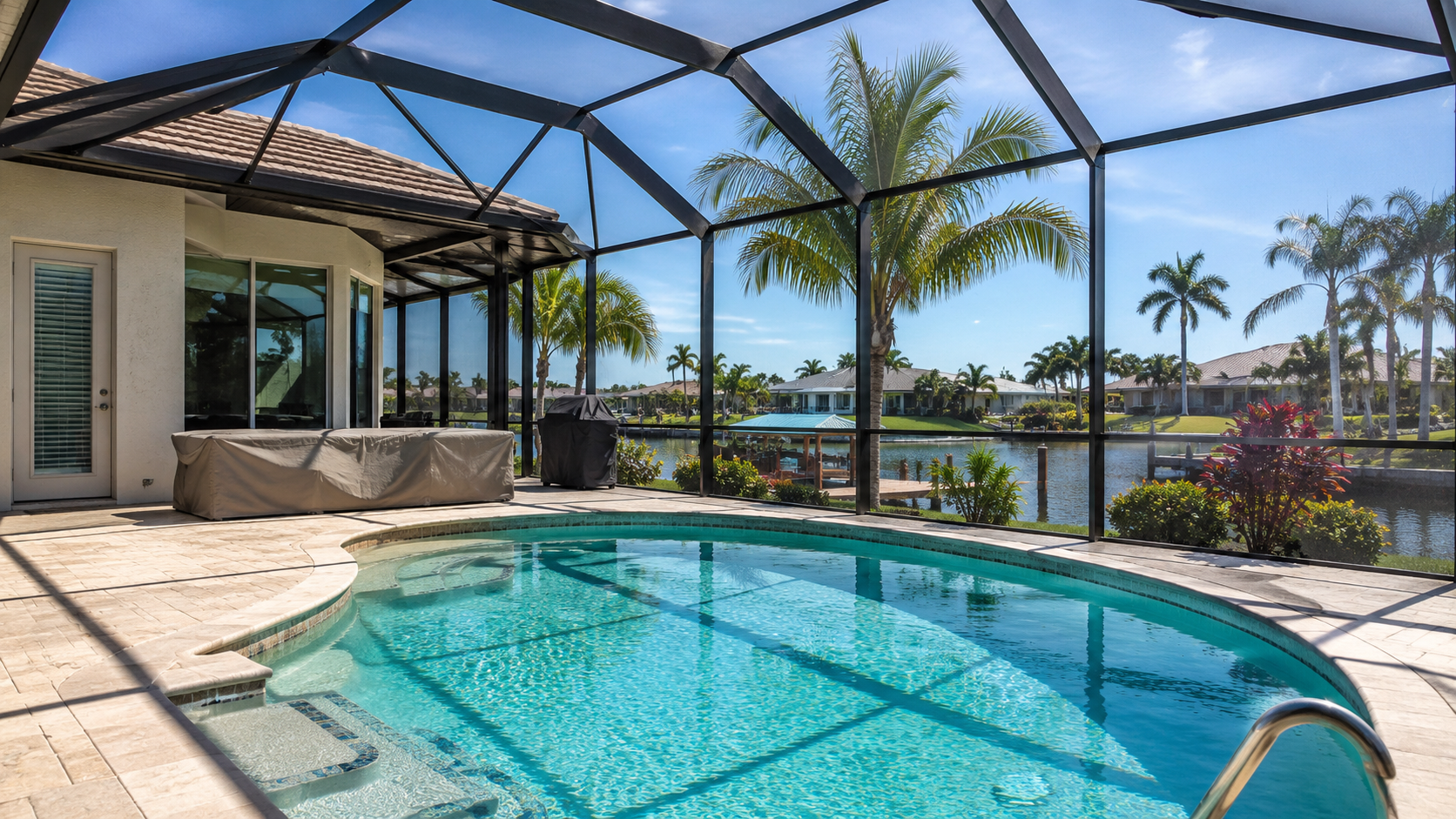
A screened lanai or pool cage helps protect outdoor living space, but it also needs attention while you are gone.
Before leaving, check for torn screens, loose panels, damaged door latches, algae buildup, corrosion, rusted screws, and gaps where pests can enter. Make sure screen doors close and latch properly.
A small tear can let in mosquitoes, lizards, leaves, and pests. A loose latch can allow a door to blow open during wind. A pool cage with existing damage may get worse during storms.
If the cage needs repairs, handle them before leaving for the season, especially before hurricane season.
Prepare for Storm Season
Seasonal homeowners need a storm plan even when they are not in Cape Coral.
Do not wait until a storm is forming to figure out who will secure your home.
Before hurricane season, review your evacuation zone, flood risk, insurance information, emergency contacts, storm shutter plan, and local alerts. Cape Coral’s hurricane preparedness resources emphasize preparing before conditions worsen and knowing when evacuation or sheltering guidance applies.
If your home has shutters, make sure they are labeled, accessible, and ready to install. If you hire someone to install them, schedule that relationship before storm season, not during the rush.
Secure or store outdoor furniture, grills, planters, umbrellas, pool toys, dock items, hoses, and loose decor. Trim weak branches and palms early. Check gutters, drainage areas, roof condition, screens, and doors.
For waterfront homes, review the dock, boat lift, seawall, and boat plan before storm season. Do not leave those decisions until the last minute.
Make the Home Look Occupied
Security is a major part of seasonal home maintenance.
An empty home should not look empty.
Use timers or smart lighting so the home does not stay dark for months. Keep landscaping maintained. Have mail, packages, and flyers removed. Make sure trash bins are not left at the curb after pickup. Keep exterior lighting working. Make sure doors, sliders, windows, garage doors, and side gates are locked.
Security cameras, video doorbells, smart locks, leak sensors, and monitored alarm systems can also help. They are not a replacement for a real person checking the property, but they can give you earlier warning when something is wrong.
Avoid posting too publicly that the home is empty for a long period, especially if your social media is connected to your real name or location.
Schedule Periodic Inspections
A seasonal home needs eyes on it.
A friend, neighbor, property manager, or home watch service can check for problems while you are gone. The important thing is that the inspections are consistent and specific.
A good inspection should look for AC issues, humidity problems, leaks, running toilets, pest activity, storm damage, pool issues, landscaping problems, irrigation leaks, mail or packages, security concerns, roof leaks, water stains, odors, and signs that something has changed.
If your home has a pool, dock, boat lift, or lanai, those areas should be checked too.
The longer you are away, the more important this becomes. A smart thermostat or camera can help, but it cannot smell mildew, notice a soft cabinet floor, check a toilet base, or see a small ceiling stain from every angle.
Hire the Right Help Before You Need It
Seasonal homeowners often need a small local team.
That may include a home watch service, pool service, lawn care company, pest control company, cleaner, handyman, HVAC company, plumber, roofer, irrigation company, and storm shutter installer.
The best time to find these people is before you leave and before storm season.
Make sure someone has access instructions, emergency contacts, alarm codes if appropriate, shutoff locations, vendor contacts, and permission to act if something urgent happens.
For example, if a home watch service finds water under a sink, who should they call? If the AC stops working in August, who can authorize service? If a storm is approaching, who handles shutters and outdoor items?
A seasonal home plan should answer those questions before there is a problem.
Clean Before You Leave
A clean home handles vacancy better.
Before leaving, clean the kitchen, bathrooms, laundry area, floors, furniture, bedding, and appliances. Do not leave food crumbs, damp towels, wet laundry, dirty dishes, open trash, or perishable items behind.
Clean the refrigerator if you are emptying and unplugging it. If the refrigerator stays on, remove perishables and consider placing a bag of ice cubes in the freezer. If you return and the bag has refrozen into a solid block, that can be a sign the power was out long enough for the ice to melt and refreeze.
Clean bathrooms and consider drain stoppers or other steps to reduce evaporation and odors. Leave closet areas clean and spaced for airflow. Do not leave clothing, leather goods, or fabrics in damp, packed conditions.
A clean home is less attractive to pests and less likely to develop odors while you are away.
Plan for Your Return
Seasonal maintenance does not end when you leave.
Before you return, ask your home watch person or service provider to check the AC, humidity, water, toilets, pool, landscaping, pests, mail, and overall condition. That way you are not walking into a surprise after a long drive or flight.
When you arrive, walk the home before fully settling in. Look under sinks, check toilets, inspect the water heater, turn on faucets, check drains, test appliances, review the thermostat, inspect the lanai, and walk outside.
If water was shut off, turn it back on carefully and check for leaks as pressure returns. If the home smells musty, feels sticky, or shows water stains, investigate before unpacking everything and assuming it is fine.
Simple Seasonal Home Checklist
Before leaving, replace the AC filter, confirm thermostat settings, check humidity, clean the home, remove perishable food, secure dry goods, check under sinks, inspect toilets, review the water heater, decide what to do with the water supply, stop mail, arrange package pickup, schedule pool and lawn care, handle pest prevention, secure outdoor items, inspect screens and doors, and confirm who will check the home.
While you are away, make sure someone checks the AC, humidity, leaks, toilets, water heater area, pests, mail, packages, landscaping, pool, lanai, security, storm damage, and anything that looks different.
Before storm season, review shutters, insurance, evacuation zone information, emergency contacts, outdoor furniture, landscaping, gutters, roof condition, pool cage, dock, boat lift, and vendor availability.
Before returning, ask for a final check so the home is ready when you arrive.
When to Call a Professional
Call a professional if you are unsure how to set up the home safely before leaving, if the AC struggles with humidity, if you have recurring pests, if the pool needs weekly care, if landscaping grows too quickly to manage remotely, if you need storm prep support, or if no trusted person can inspect the home regularly.
Depending on your situation, you may need a home watch service, HVAC company, pool service, lawn care company, pest control provider, cleaner, handyman, plumber, roofer, irrigation company, storm shutter installer, or security company.
Professional help is especially valuable if you are out of state, out of the country, or unable to return quickly when something goes wrong.
Final Thoughts
A seasonal home in Cape Coral needs a real maintenance plan.
The biggest risks are not always dramatic. They are often small problems that go unnoticed for too long: high humidity, a clogged AC drain line, a running toilet, a slow leak, a green pool, an overgrown yard, a torn screen, a package at the door, or storm damage after bad weather.
Keep the AC running, manage humidity, weather-seal doors and windows, handle water shutoff decisions carefully, prevent pests, stop mail, maintain the pool and landscaping, prepare for storms, improve security, and schedule periodic inspections.
CapeCoralNow is not currently recommending a specific home watch service, pool company, lawn care company, pest control provider, cleaner, handyman, or storm prep provider. As this resource grows, we may feature trusted local providers in the future.
For now, use this guide to protect your Cape Coral home while you are away and make your return easier.
Frequently Asked Questions
Should I turn off the AC in my Cape Coral home when I leave for the season?
In most cases, no. The AC helps control indoor humidity, which is critical in Florida. UF/IFAS recommends keeping the thermostat set no higher than 85°F so the system cycles and helps reduce moisture while you are away.
Should I shut off the water before leaving a seasonal home?
Many seasonal homeowners choose to shut off water at the main supply for extended absences, unless water is needed for irrigation, pool equipment, or other systems. If you are unsure, ask a plumber or home watch professional to help create a safe plan.
How often should someone check my seasonal home?
The right frequency depends on the home, season, insurance requirements, pool, landscaping, storm risk, and whether the home has remote monitoring. Many homeowners use regular home watch visits so leaks, AC issues, pest problems, and storm damage are caught early.
How do I prevent mold in a vacant Florida home?
Keep the AC running, manage humidity, weather-seal windows and doors, clean and dry the home before leaving, open interior spaces for airflow, remove damp fabrics, and have someone check the home regularly.
Who should help maintain a seasonal home in Cape Coral?
Many seasonal homeowners use a combination of home watch, pool service, lawn care, pest control, HVAC, cleaning, handyman, plumbing, and storm prep services. The right setup depends on how long you are away and how quickly you can respond to problems.