
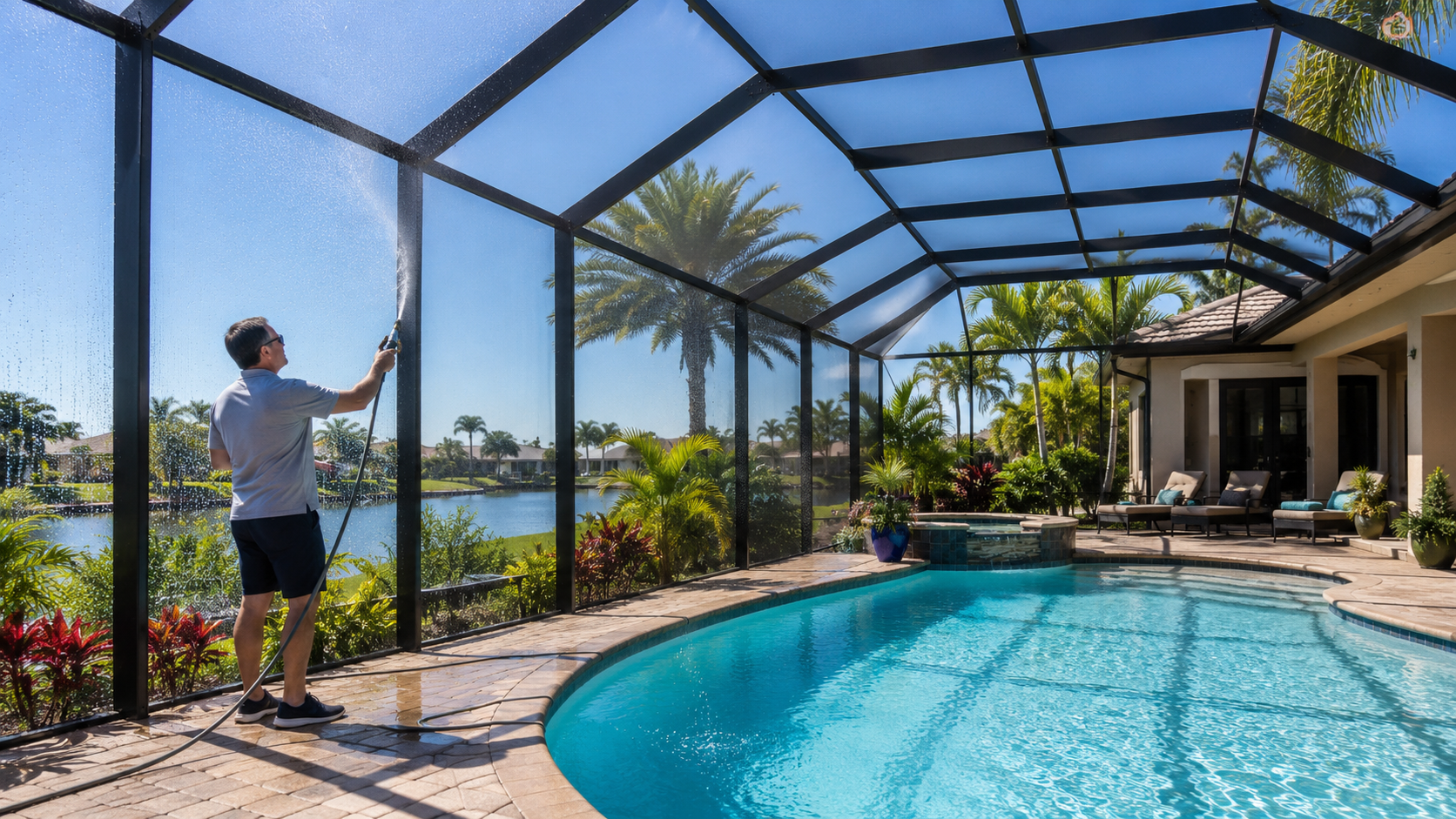
A screened lanai or pool cage is one of the best parts of owning a home in Cape Coral.
It gives you shade, airflow, bug protection, outdoor living space, and a cleaner pool area without completely closing you off from the Florida lifestyle. For many local homeowners, the lanai is almost like a second living room.
But like anything exposed to heat, rain, humidity, storms, palm debris, pool chemicals, and daily use, a lanai or pool cage needs regular maintenance.
If the screens get dirty, torn, loose, or covered in algae, the space starts to feel neglected. If the frame becomes corroded, doors stop latching, screws rust, or storm damage gets ignored, small problems can turn into larger repairs.
The good news is that basic lanai and pool cage maintenance is manageable for many homeowners. You do not need to become a contractor. You just need to clean it regularly, inspect it carefully, and know when a repair is beyond a simple DIY fix.
CapeCoralNow is not currently recommending a specific screen repair, pool cage, pressure washing, or aluminum contractor. As we continue building local home services resources, we may feature trusted Cape Coral providers in the future. For now, use this guide to understand what to check and when professional help may make sense.
Table of Contents
Why Lanai and Pool Cage Maintenance Matters in Cape Coral
Cape Coral homes are built for outdoor living. Many properties have screened lanais, pool cages, patios, outdoor kitchens, waterfront views, pool decks, and backyard spaces that are used year-round.
A screen enclosure helps keep mosquitoes, flies, leaves, palm fronds, pool debris, lizards, and other outdoor pests away from your living space. It also helps keep the pool cleaner and makes the backyard more usable during warm Florida evenings.
At the same time, these enclosures take a lot of abuse. Cape Coral lanais and pool cages deal with humidity, heavy rain, algae, mildew, pool chemicals, salt air in some areas, storm winds, flying debris, UV exposure, rusted fasteners, and everyday wear from pets, kids, furniture, and pool toys.
A clean, well-maintained enclosure makes your home feel better and can help prevent small repairs from becoming expensive problems.
Clean the Screens Gently
Screens collect dust, pollen, algae, mildew, spider webs, insects, and windblown debris. If you let that buildup sit too long, the screens can start to look dark, stained, and worn.
For basic cleaning, start simple. A garden hose, mild soap, soft brush, bucket of water, and microfiber cloth are usually enough for regular maintenance. Spray the screens gently, use soapy water on areas with buildup, and rinse everything well so residue does not sit on the screen.
The most important thing is to avoid being too aggressive. Harsh scrubbing, stiff brushes, and strong chemicals can weaken or damage screen material. The goal is to clean the screen, not stretch it, tear it, or push it loose from the frame.
Be Careful With Pressure Washing
Pressure washing can make a pool cage or lanai look dramatically cleaner, but it can also cause damage if it is done the wrong way.
Too much pressure can tear screens, loosen spline, bend frames, damage paint, push water into unwanted areas, or make weak panels worse. This is especially true on older enclosures or screens that are already brittle.
If you pressure wash the enclosure yourself, use low pressure and keep the spray at a safe distance. Do not blast the screens directly. Be extra careful around door corners, fasteners, frame joints, roof panels, and areas with existing damage.
If the enclosure is tall, heavily stained, older, or already damaged, hiring a professional pressure washing company may be the safer move.
Check for Tears, Holes, and Loose Panels
Small screen tears are easy to ignore, but in Cape Coral, one small opening can quickly become a bug problem.
Walk around the lanai or pool cage and look closely at the lower panels first. These are the areas most likely to be damaged by pets, pool toys, lawn equipment, patio furniture, and foot traffic.
Look for holes, long tears, loose corners, sagging panels, screen pulling away from the frame, or gaps along the edges. Also check around door handles and corners, since those areas get touched and bumped more often.
A small tear may be patched temporarily, but patches are not always a long-term solution. If the screen is old, brittle, or pulling loose in multiple places, replacing the panel may make more sense.
Inspect the Spline
The spline is the rubber-like material that holds the screen into the frame channel.
When the spline gets old, cracked, loose, or brittle, the screen can start pulling away from the frame. You may notice gaps along the edges, screen movement during wind, corners coming loose, or panels that look loose even if they are not torn.
For lower panels, some handy homeowners may be able to replace screen and spline themselves. But high panels, roof panels, and large sections are usually better left to a screen repair professional. The higher the panel, the more dangerous and frustrating the repair becomes.
Watch for Algae and Mildew
Florida humidity makes algae and mildew common on lanais, pool cages, patios, pavers, screens, and aluminum frames.
You may notice green film, black streaks, slippery surfaces, stained panels, or dark buildup in shaded corners. Problem areas often include the bottom rails, door tracks, frame joints, roof panels, and areas near landscaping or irrigation spray.
Clean these areas before the buildup gets heavy. Mild soap, water, and a soft brush can work well for routine cleaning. If algae keeps returning quickly, look for the source. The issue may be poor drainage, irrigation hitting the cage, overgrown landscaping, clogged gutters, or too much shade.
Check the Aluminum Frame
Most pool cages and lanais use aluminum framing. Aluminum does not rust like steel, but it can still oxidize, corrode around fasteners, loosen, bend, or weaken over time.
Look for chalky white oxidation, rust stains around screws, loose brackets, missing fasteners, bent frame sections, cracked aluminum, sagging areas, or joints that look like they are pulling apart.
A little surface oxidation may be mostly cosmetic. Structural movement, bent beams, corroded connection points, or frame sections pulling away from the home are more serious.
If the frame looks unstable, do not climb on it, lean ladders against it, or try to force pieces back into place. That is when it is time to call a pool cage or aluminum contractor.
Check Screws, Fasteners, and Hardware
Fasteners are easy to overlook, but they matter.
Rusted screws, missing bolts, loose brackets, and corroded hardware can affect both the appearance and strength of the enclosure. If you see rust stains running down the frame, screws backing out, missing fasteners, or loose door hardware, the enclosure may need attention.
In some cases, replacing old fasteners with appropriate corrosion-resistant hardware can help extend the life of the structure. This is a common service for older pool cages where the frame is still in decent condition but the hardware is aging.
Test the Doors and Latches
A lanai door that does not close properly defeats the whole purpose of having a screened space.
Open and close each door. Make sure it latches, swings properly, does not drag, and does not leave gaps around the edges. Check the hinges, handle, latch, closer, sweep, and screen near the handle.
If the door blows open in the wind, does not latch, or leaves a visible gap, bugs and small pests can get in. Some door problems are simple adjustments. Others may require new hardware, hinges, closers, screen, spline, or frame repair.
Also keep door tracks clean. Dirt, leaves, sand, dead bugs, and debris can make sliding doors harder to use and can contribute to mildew or corrosion over time.
Keep Landscaping Away From the Screen
Plants touching the lanai or pool cage can trap moisture, stain screens, damage panels, attract pests, and make cleaning harder.
Trim shrubs, vines, palms, hedges, and grass away from the screen structure. Leave enough space for airflow and maintenance access. Avoid letting vines grow into the screen. They may look nice for a while, but they can damage panels and make repairs more difficult later.
This also helps reduce pest pressure around the enclosure. A clean gap between landscaping and the screen makes it easier to spot problems before they get worse.
Watch for Pool Chemical Damage
Pool chemicals can affect the area around the pool if they are spilled, stored improperly, or allowed to sit on surfaces.
Be careful with chlorine tablets, shock, acid, salt system residue, chemical splashes, and leaking chemical containers. Store pool chemicals safely and away from metal components when possible.
If chemicals spill near the frame, door hardware, or fasteners, clean the area according to the product instructions. Do not let chemical residue sit on aluminum or hardware longer than necessary.
Inspect After Heavy Storms
After strong winds, heavy rain, or tropical weather, inspect the lanai or pool cage once it is safe.
Look for torn screens, loose panels, bent frame sections, missing screws, damaged doors, new leaks, screen panels pulling away, palm fronds on top, or frame movement.
Take photos before making repairs, especially if damage may be part of an insurance claim.
Do not climb on the cage to remove debris. Pool cages are not designed to be walked on. If large branches or heavy debris are on top, call a professional.
Do Not Ignore Storm Damage
Some storm damage is obvious. Other damage is subtle.
A screen might only be slightly loose. A frame might look just a little bent. A latch might not close as smoothly. A few fasteners might be missing.
Small enclosure damage can get worse during the next storm, especially if the frame or roof panels were affected.
Call a professional if you notice bent frame members, damaged roof panels, multiple torn screens, doors that no longer close correctly, frame sections pulling from the home, loose structural connections, or heavy debris impact.
Screen repairs are one thing. Structural pool cage repairs are something else entirely.
When Screen Repair Is Enough
Not every issue means you need a full replacement.
Screen repair may be enough if only one or two panels are torn, the frame is still strong, the spline channel is intact, the doors work properly, and the damage is isolated.
Small screen repairs can keep bugs out and extend the life of the enclosure. But if the screen material is old and brittle throughout the cage, replacing one panel may only be a temporary fix.
If multiple panels are faded, loose, sagging, or tearing, full rescreening may be the smarter option.
When Rescreening May Be Needed
Rescreening means replacing multiple screen panels or the entire screen system while keeping the existing frame.
This may make sense if the screens are brittle, panels keep tearing, bugs keep getting in, patches are everywhere, or the enclosure still looks worn even after cleaning.
Rescreening can make an older pool cage look much better without replacing the entire structure.
A screen repair company can help determine whether spot repairs or full rescreening makes more sense.
When the Frame Needs Professional Attention
Frame issues are more serious than screen issues.
A torn screen lets bugs in. A damaged frame can affect the structure.
Call a pool cage or aluminum contractor if you notice bent beams, corroded structural areas, missing or rusted fasteners throughout the cage, loose frame connections, sagging roof sections, cracked aluminum, the cage pulling away from the home, or any sign that the structure is moving.
Do not try to repair structural aluminum components unless you are qualified.
Be Careful With Ladders
Many pool cage and lanai repairs involve ladders, and that is where DIY becomes risky.
Avoid DIY repairs if the panel is high, the surface is wet, the ground is uneven, you need to work over a pool, the frame is damaged, or you are not comfortable with heights.
Falls can cause serious injuries. If the repair is above easy reach, hiring a professional is usually the smarter move.
Understand Permit Issues for Bigger Work
Small screen repairs may not always require the same process as larger structural work, but new screen enclosures, pool safety barriers, screen room roofs, structural changes, and major repairs may involve permits.
Cape Coral has specific permitting requirements for screen enclosures and pool safety barriers.
Before starting major work, ask whether the frame is being modified, whether the enclosure is being replaced, whether the work affects a pool safety barrier, and whether the contractor is properly licensed and registered.
A reputable contractor should be familiar with local requirements and explain what permits are needed.
Simple Lanai and Pool Cage Maintenance Routine
For regular upkeep, keep the lanai swept, remove leaves and debris, check door latches, look for new screen tears, clean door tracks, and watch for standing water.
Every month or so, inspect the lower screen panels, look for algae or mildew, check fasteners, trim nearby landscaping, and make sure doors close properly.
Before storm season, repair torn screens, remove loose lanai items, inspect frame connections, clear nearby debris, secure outdoor furniture, and take photos of the enclosure.
After storms, inspect for tears, bent frames, loose panels, and damaged doors. Do not climb onto the cage or try to remove heavy debris yourself.
When to Call a Professional
Many homeowners can handle basic cleaning, light rinsing, lower-panel inspections, door track cleaning, and simple visual checks.
Professional help may make sense when screens are high up, multiple panels need repair, roof panels are damaged, the frame is bent or corroded, doors do not latch properly, fasteners are rusted throughout, the enclosure was damaged by a storm, algae buildup is heavy or hard to reach, or the repair may involve permits.
Depending on the issue, you may need a screen repair company, pool cage contractor, pressure washing company, aluminum contractor, handyman, or gutter professional.
The most important thing is not waiting until a small issue becomes a bigger one.
Final Thoughts
A screened lanai or pool cage is one of the best features of a Cape Coral home, but it needs regular care.
Clean the screens gently, remove algae buildup, check for tears, inspect door latches, watch for frame corrosion, trim landscaping, clear debris, and inspect carefully after storms.
Simple maintenance can help keep your outdoor space cleaner, more comfortable, and more enjoyable.
But when screens are high, frames are bent, fasteners are corroded, storm damage is visible, or structural repairs are needed, it is time to call a professional.
CapeCoralNow is not currently recommending a specific screen repair, pool cage, pressure washing, or aluminum contractor. As this resource grows, we may feature trusted local providers in the future.
For now, use this guide to maintain your lanai or pool cage and know when professional help makes sense.
Frequently Asked Questions
How often should I clean my screened lanai or pool cage?
Many Cape Coral homeowners should rinse and inspect their screens regularly, with deeper cleaning a few times per year as needed. Homes with heavy landscaping, shade, pool use, or algae buildup may need more frequent cleaning.
Can I pressure wash my pool cage?
You can, but you need to be careful. High pressure can tear screens, loosen spline, bend frames, or damage paint. Use low pressure and avoid blasting screens directly. For tall or older enclosures, hiring a professional may be safer.
What causes green algae on lanai screens and frames?
Algae often grows where moisture, shade, and organic debris collect. Common causes include humidity, rain, irrigation overspray, nearby landscaping, poor drainage, and limited airflow.
When should I repair or replace lanai screens?
Repair screens when you see holes, tears, loose edges, sagging panels, or gaps where bugs can enter. If many panels are brittle, faded, loose, or torn, full rescreening may be a better option.
When should I call a pool cage professional?
Call a professional if the frame is bent, corroded, loose, storm-damaged, pulling away from the home, or if repairs involve high panels, roof panels, ladders, or structural components.