
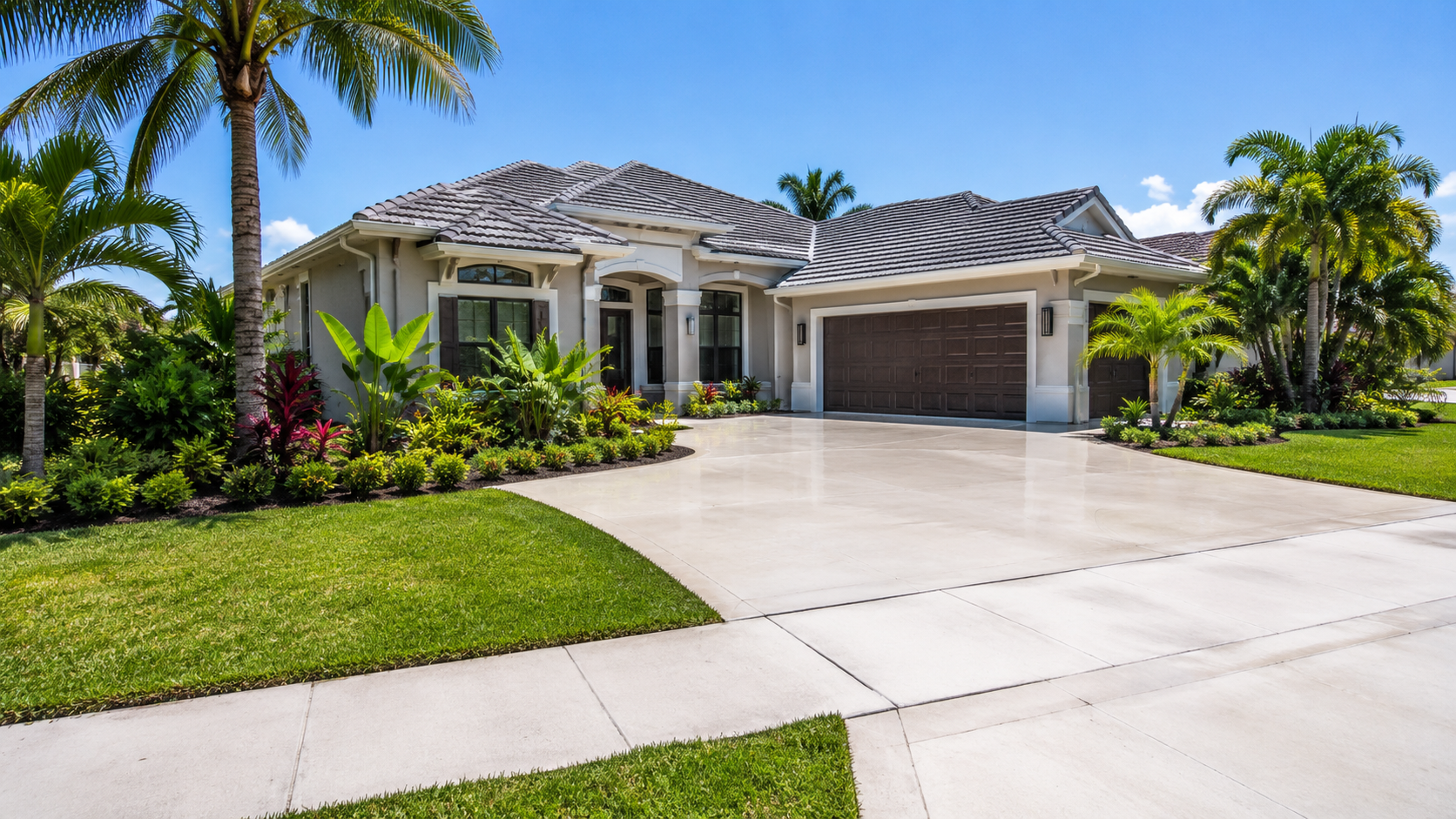
Pressure washing is one of the fastest ways to make a Cape Coral home look cleaner.
A dirty driveway, stained pool deck, green lanai screen, slippery patio, or algae-covered fence can make the whole property feel neglected. In Florida, that buildup can happen fast because of humidity, rain, heat, shade, irrigation overspray, palm debris, mildew, algae, and year-round outdoor living.
For Cape Coral homeowners, pressure washing is not just about curb appeal. It can also help reduce slippery surfaces, clean up outdoor areas, protect pavers, make the pool area more inviting, and keep the home looking maintained through rainy season and storm season.
But pressure washing is not something to do aggressively on every surface.
Some areas can handle stronger cleaning. Others need a softer approach. Roofs, screens, painted surfaces, stucco, wood, older pavers, and docks can be damaged if too much pressure is used.
This guide covers what Cape Coral homeowners should clean, how often to clean it, what to be careful with, and when it may be smarter to call a professional pressure washing company, paver sealing company, roof cleaning company, or exterior cleaning contractor.
CapeCoralNow is not currently recommending a specific pressure washing company, paver sealing provider, or roof cleaning company. As we continue building local home services resources, we may feature trusted Cape Coral providers in the future. For now, use this guide to understand what needs cleaning and when professional help may make sense.
Table of Contents
Why Pressure Washing Matters in Cape Coral
Cape Coral homes deal with constant outdoor exposure.
Driveways get stained by tires, oil, rust, dirt, irrigation, and daily use. Pool decks collect sunscreen, algae, mildew, leaves, and water spots. Lanais and pool cages collect pollen, bugs, spider webs, algae, and palm debris. Pavers can grow weeds or lose joint sand. Fences can turn green or gray. Docks can become slippery. Siding and stucco can collect mildew, especially in shaded areas.
In a dry climate, some of this might take years to show. In Southwest Florida, it can show up in a season.
Regular cleaning helps keep the property looking fresh and can make outdoor surfaces safer to walk on. It also gives you a chance to notice cracks, loose pavers, damaged screens, drainage problems, wood rot, rust stains, roof stains, and other issues before they get worse.
The key is using the right method for each surface.
How Often Should Cape Coral Homeowners Pressure Wash?
There is no perfect schedule for every home.
A shaded home with heavy trees, a pool, irrigation overspray, and a screened enclosure may need cleaning more often than a sunny home with fewer trees and less moisture exposure.
As a general starting point, many Cape Coral homeowners may want to clean high-traffic outdoor surfaces once or twice per year. Some areas, like pool decks, lanais, and shady patios, may need lighter cleaning more often. Other areas, like fences or siding, may only need attention when buildup becomes visible.
A simple schedule looks like this:
Driveways and sidewalks: every 6 to 12 months, or sooner if stains and algae build up
Pool decks and patios: every 3 to 6 months for light cleaning, deeper cleaning as needed
Lanais and pool cages: rinse regularly, deep clean a few times per year
Pavers: every 6 to 12 months, depending on weeds, stains, and sand loss
Fences: once a year or as needed
Siding and stucco: once a year or when mildew appears
Docks: every few months if slippery, shaded, or heavily used
Roofs: only when needed, and usually with professional soft washing instead of high pressure
This is only a guide. Your actual schedule depends on shade, rain, irrigation, nearby trees, pool use, waterfront exposure, and how clean you want the property to look.
Driveways
Driveways are one of the most common pressure washing projects because the before-and-after difference is usually dramatic.
Cape Coral driveways can collect tire marks, dirt, algae, mildew, oil spots, rust stains from irrigation, grass clippings, and general road grime. Concrete driveways usually tolerate pressure washing better than delicate surfaces, but they can still be damaged by using the wrong nozzle, too much pressure, or holding the wand too close.
For most homes, cleaning the driveway every 6 to 12 months is a reasonable starting point. If the driveway is shaded, near irrigation, or gets slippery after rain, it may need cleaning more often.
Oil, rust, and irrigation stains may require special treatment. Pressure alone does not always remove them, and aggressive blasting can leave uneven marks. If stains are deep or widespread, a professional may be able to treat them more evenly.
Sidewalks and Walkways
Sidewalks and walkways should be cleaned before they become slippery.
In Florida humidity, algae and mildew can create slick surfaces, especially in shaded areas or spots that stay wet after rain. This matters around front entries, side yards, pool paths, and walkways used by kids, guests, delivery drivers, or older family members.
A sidewalk that looks only slightly green can still be slick when wet.
Clean walkways every 6 to 12 months, or more often if you notice slippery areas. Pay attention to places near sprinklers, gutters, low spots, and landscaping beds.
If the surface is cracked, uneven, or flaking, avoid blasting it aggressively. Pressure washing can make weak concrete worse if the surface is already deteriorating.
Pool Decks
Pool decks need regular attention because they get constant moisture.
Between pool water, sunscreen, wet feet, leaves, algae, mildew, shade, and patio furniture, the pool deck can get dirty quickly. It can also become slippery if buildup is allowed to sit.
How you clean a pool deck depends on the material. Concrete, acrylic coatings, travertine, pavers, tile, and painted surfaces all react differently. Some can tolerate moderate pressure. Others need a gentler wash.
For many Cape Coral homes, a light cleaning every few months can help keep the pool area fresh. A deeper cleaning once or twice per year may be enough if the surface is not heavily stained.
Be careful around pool edges, screen enclosures, drains, furniture, and painted coatings. Too much pressure can damage surface coatings, loosen sand between pavers, or force debris into the pool.
Lanais and Screened Enclosures
Screened lanais and pool cages are very Cape Coral, and they need cleaning because they collect everything.
Screens can hold dust, pollen, spider webs, bugs, algae, mildew, and palm debris. Aluminum frames can develop oxidation or staining. Door tracks can fill with dirt and dead insects. Corners and bottom rails often collect green buildup.
The safest approach is gentle cleaning. A garden hose, mild soap, soft brush, and light rinsing are often better than aggressive pressure.
If you use a pressure washer, keep the pressure low and do not blast the screens directly. High pressure can tear screens, loosen spline, bend frames, damage paint, or make older panels worse.
For routine maintenance, rinse the lanai regularly and deep clean it a few times per year. If the pool cage is tall, heavily stained, or already damaged, hiring a professional is usually safer.
Patios and Outdoor Living Areas
Patios collect dirt, mildew, food spills, drink stains, grill residue, plant stains, and furniture marks.
Because patios are used for relaxing, grilling, entertaining, and outdoor dining, they often need more frequent cleaning than areas people rarely use.
A covered patio may stay cleaner from rain but may also hold more humidity and shade, which can encourage mildew. An uncovered patio may get more sun but collect more dirt and leaf debris.
Light cleaning every few months can help keep the space comfortable. Deeper cleaning once or twice per year is usually enough for many homes.
Move furniture, rugs, planters, grills, and storage bins before cleaning so you do not leave dirty outlines or trapped moisture underneath.
Fences
Fences can make a property look much cleaner when they are maintained.
Vinyl fences often collect algae and mildew, especially along shaded sides and lower sections. Wood fences can turn gray, grow mildew, or stain from sprinklers and landscaping. Metal fences may need cleaning around joints and posts.
Vinyl fences can usually be cleaned with a gentle wash and mild cleaner. Wood fences need more caution because too much pressure can gouge the wood, raise the grain, or leave uneven streaks.
A good rule is to clean fences once a year or when buildup becomes noticeable.
If the fence is old, brittle, cracked, leaning, or damaged, inspect it before washing. Pressure can expose weak spots quickly.
Siding and Stucco
Many Cape Coral homes have stucco or painted exterior surfaces.
These surfaces can collect mildew, dirt, spider webs, irrigation stains, and algae, especially on shaded sides of the home.
Stucco and painted surfaces should not be blasted aggressively. High pressure can damage paint, force water into cracks, scar the surface, or push moisture behind areas where it does not belong.
A soft wash or low-pressure cleaning method is usually better for exterior walls. The goal is to clean the surface without damaging the finish.
Many homes benefit from exterior wall cleaning once a year or whenever mildew becomes visible. Homes with heavy shade, landscaping close to the walls, or irrigation hitting the house may need more frequent cleaning.
Roofs
Roofs are where homeowners need to be especially careful.
A stained roof may look like it needs pressure washing, but high pressure can damage roofing materials. On asphalt shingles, aggressive washing can remove protective granules and shorten the life of the roof. On tile roofs, pressure can crack tiles, force water under materials, or create safety issues. Metal roofs also need the right cleaning method to avoid damage.
In most cases, roof cleaning should be done with a proper soft wash method by someone who understands the roof type.
Do not climb on the roof with a pressure washer unless you are qualified, properly equipped, and know the roofing material can handle the cleaning method. Falls are a serious risk, and roof damage can become expensive.
If your roof has black streaks, algae, mildew, heavy staining, or storm debris, call a roof cleaning professional or roofer for guidance.
Docks
Cape Coral waterfront homes often have docks, boat lifts, seawalls, and walkways near the water.
Docks can become slippery from algae, mildew, salt exposure, rain, shade, fish residue, and daily use. That makes cleaning important, but docks also need a careful approach.
Wood docks can be damaged by aggressive pressure. Composite decking may have manufacturer cleaning recommendations. Concrete docks can usually handle more cleaning, but edges and joints still need caution.
Clean docks as needed, especially if they become slippery. For many homes, this may mean light cleaning every few months and deeper cleaning once or twice a year.
Be careful with runoff near canals and waterways. Avoid letting chemicals, debris, paint chips, oil, or contaminated wash water flow directly into the water.
Pavers
Pavers are common around driveways, patios, pool decks, walkways, and lanais.
They can look amazing when clean, but pressure washing them incorrectly can cause problems.
Too much pressure can remove joint sand, create uneven areas, damage older pavers, or leave streaks. If pavers are sealed, aggressive washing can damage or unevenly wear the sealer.
Pavers often need cleaning every 6 to 12 months, depending on shade, weeds, irrigation stains, and foot traffic.
After cleaning, some paver areas may need new joint sand. In some cases, paver sealing can help protect the surface, improve appearance, reduce staining, and slow weed growth. However, sealing needs to be done correctly on a clean, dry surface.
If your pavers are uneven, loose, heavily stained, or previously sealed, consider calling a paver cleaning and sealing professional.
What Not to Pressure Wash Aggressively
Pressure washing is useful, but not everything should be blasted.
Be careful with roofs, old stucco, painted surfaces, wood fences, wood decks, lanai screens, pool cage frames, outdoor electrical fixtures, window seals, door thresholds, soft stone, older pavers, cracked concrete, and anything already loose or damaged.
Also avoid spraying directly into vents, soffits, outlets, light fixtures, door gaps, window edges, AC equipment, pool equipment controls, or under siding.
A pressure washer can force water where rain would not normally go. That can create moisture problems, electrical hazards, or hidden damage.
When in doubt, use lower pressure, more distance, a wider nozzle, and the mildest cleaning method that works.
Be Careful Around Outdoor Electrical and Pool Equipment
Cape Coral homes often have pool pumps, heaters, automation panels, outdoor outlets, lights, fans, irrigation controllers, and dock power.
Do not spray electrical equipment directly.
Before cleaning near outdoor electrical areas, know where the outlets, switches, panels, pool controls, and lights are located. Use caution around covered outlets and fixtures, even if they are made for outdoor use.
Pool equipment also deserves care. You can clean the area around it, but avoid blasting pumps, heaters, valves, controls, or exposed wiring.
If an area has electrical concerns, skip it and call a professional.
Watch Where the Water Goes
Pressure washing creates runoff.
That runoff may carry dirt, algae, soap, oil, chemicals, paint chips, fertilizer, pool chemicals, or other debris. Around Cape Coral homes, runoff can flow toward streets, drains, canals, swales, yards, pools, and landscaping beds.
Try to keep cleaning as controlled as possible. Sweep up loose debris before washing. Avoid overusing chemicals. Do not push oily or chemical-heavy water into storm drains or waterways. Be especially careful around docks, canals, pool decks, driveways, and streets.
Professional pressure washing companies may use methods to manage runoff depending on the job and surface.
Pressure Washing Before Storm Season
Pressure washing before storm season can make sense, especially if outdoor surfaces are already slick or covered in buildup.
Before storm season, homeowners may want to clean driveways, walkways, lanais, pool decks, patios, gutters, and areas where debris collects.
A clean surface also makes it easier to spot cracks, drainage issues, loose pavers, screen damage, rust stains, and areas that need repair.
That said, do not wait until a storm is close. Pressure washing right before severe weather can leave outdoor items displaced, surfaces wet, and equipment out when you need to be securing the property.
Pressure Washing After Storms
After a storm, pressure washing can help clean up dirt, leaves, stains, and debris, but safety comes first.
Before cleaning, check for downed power lines, broken glass, loose branches, damaged screens, unstable fences, roof damage, standing water, and electrical hazards.
Do not pressure wash flood-contaminated areas without understanding the risks. Stormwater and floodwater can contain contaminants that require safer cleanup methods.
If the home has major storm damage, document it with photos before cleaning anything that might be part of an insurance claim.
DIY Pressure Washing vs Hiring a Professional
DIY pressure washing can work well for basic surfaces like some concrete driveways, sidewalks, and small patios if you use the right equipment and technique.
But professional help makes sense when the surface is delicate, high, heavily stained, sealed, roof-related, near water, near electrical equipment, or at risk of damage.
A professional may be the better choice for roof cleaning, tall pool cages, large paver areas, heavy algae, rust stains, oil stains, docks, multi-story homes, older stucco, and any job requiring ladders or special cleaning solutions.
The cost of hiring a professional may be less than the cost of damaging screens, paint, pavers, shingles, tile, or outdoor electrical equipment.
Simple Pressure Washing Schedule for Cape Coral Homes
For most Cape Coral homeowners, a practical schedule is better than waiting until everything looks bad.
Driveways, sidewalks, and walkways can often be cleaned every 6 to 12 months. Pool decks, lanais, and patios may need lighter cleaning every few months because they are used more often and stay damp. Fences and siding can usually be cleaned once a year or when buildup becomes visible. Pavers may need cleaning every 6 to 12 months, with joint sand or sealing considered when needed. Docks should be cleaned whenever they become slippery or stained. Roofs should be cleaned only when needed, and usually by a professional using a roof-safe method.
A little maintenance throughout the year is easier than trying to rescue every surface after years of buildup.
When to Call a Professional
Call a professional if the surface is high, fragile, sealed, roof-related, heavily stained, close to electrical equipment, near a canal, or already damaged.
You should also consider hiring help if you need roof cleaning, pool cage cleaning, paver sealing, rust stain removal, oil stain treatment, dock cleaning, large driveway cleaning, or pressure washing after storm damage.
Depending on the job, you may need a pressure washing company, roof cleaning company, paver sealing company, pool cage cleaner, dock cleaning service, or exterior cleaning contractor.
Final Thoughts
Pressure washing can make a Cape Coral home look cleaner fast.
Driveways, sidewalks, pool decks, lanais, patios, fences, siding, docks, and pavers all benefit from regular exterior cleaning. But the right method matters.
Concrete can usually handle more pressure. Screens, roofs, stucco, wood, painted surfaces, pavers, docks, and sealed surfaces need more care.
The goal is not to blast every surface as hard as possible. The goal is to clean the home without causing damage.
CapeCoralNow is not currently recommending a specific pressure washing company, paver sealing provider, roof cleaning company, or exterior cleaning contractor. As this resource grows, we may feature trusted local providers in the future.
For now, use this guide to decide what needs cleaning, how often to clean it, and when professional help makes sense.
Frequently Asked Questions
How often should Cape Coral homeowners pressure wash their driveway?
Many homeowners clean driveways every 6 to 12 months. Shaded driveways, heavily used driveways, or driveways with algae, tire marks, rust stains, or irrigation staining may need cleaning more often.
Can I pressure wash my roof?
You should not aggressively pressure wash a roof. Roofs usually need a gentler cleaning method, often called soft washing, and the right method depends on the roofing material. For most homeowners, roof cleaning is better left to a professional.
Is pressure washing safe for pool cages and lanai screens?
It can be safe if done gently, but high pressure can tear screens, loosen spline, damage frames, and make older panels worse. Use low pressure and avoid blasting screens directly.
Should I seal my pavers after pressure washing?
Paver sealing may help protect the surface, improve appearance, reduce staining, and slow weed growth, but it needs to be done correctly. If pavers are uneven, stained, or previously sealed, consider calling a professional.
What surfaces should not be pressure washed aggressively?
Avoid aggressive pressure on roofs, screens, painted surfaces, stucco, wood fences, wood decks, window seals, outdoor electrical fixtures, older pavers, soft stone, cracked concrete, and anything already loose or damaged.